Python Analytics Playground
Context
In product analytics, most tasks start the same way: load an export, clean it, look at distributions and correlations, show charts. This project turns that routine into reusable modules — so every new analysis starts not from scratch, but from a tested foundation.
Data & Method
Package layout (src/python_analytics/):
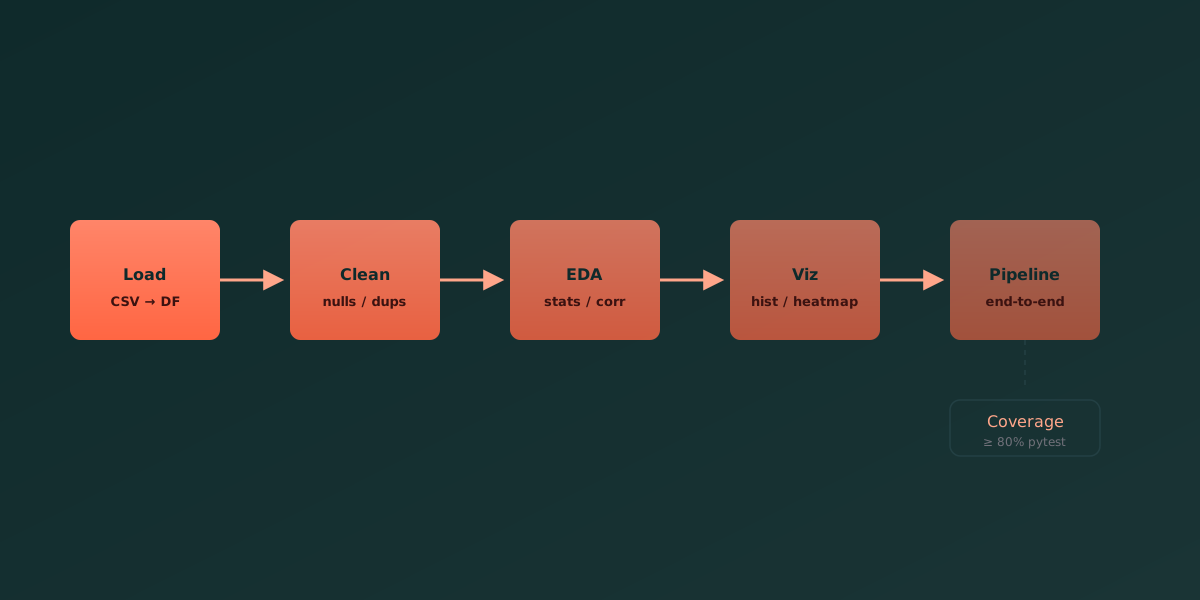
load.py(REQ-002) — CSV loading into a DataFrame with basic checks.clean.py(REQ-003) — missing values, duplicates, type coercion.eda.py(REQ-004) — descriptive stats, missingness, correlations.viz.py(REQ-005) — histograms, correlation heatmaps.pipeline.py(REQ-006) — end-to-end pipeline runnable aspython -m python_analytics.
Each module covers a single requirement from the PRD (docs/prd.md), and the tests in tests/ check exactly those requirements — coverage ≥80%.
Run
uv sync --all-groups
uv run pytest                          # tests + coverage (≥80%)
uv run python -m python_analytics      # end-to-end pipeline
Findings
The key difference from one-off analysis scripts is structure and testability: modules are small and single-purpose, requirements are documented in a PRD, and tests keep coverage ≥80%. This makes the tool “product-grade”: you can hand it to teammates, extend it, and not fear breaking it.
Impact
- Reusability — a starting point for every new analysis instead of a from-scratch script.
- Coverage ≥80% — changes don’t silently break existing behavior.
- PRD tracing — each module maps to a requirement, tests verify requirements.
- uv tooling — reproducible environment with no dependency drift.