Day 2 of the program: 37 talks in 5 halls. Times are Moscow time; the grid mirrors the original page but is built at build time.
Duration
3 days
Talks
91 talks
Tracks
11 tracks
Halls
9 halls
37talks
Talk schedule
Time
Molecule
Atom
Arkhangelsk
Physics
Kinetics
10:20
10:20 - 10:55Molecule
Беслан КурашовCo-founder and chief AI officer, Plevako.Ai
Methods for working with sensitive data: what kinds of data exist, which methods suit each case, how to pick the right method, and where it can all break. We look at how (and what) not to let providers do with your data. A detailed discussion of how to use LLM in situations where a lot of sensitive data may be involved, and how to avoid leaks, reassure the security team, release the service, and not go broke on hardware. Listeners will get answers to the questions: how to use LLM effectively without training the provider, without breaking the law, without attracting regulators, and while staying friends with the security team; what to do if we want to run neural networks on our own (on-premise)? How to “manipulate” data to remove sensitivity while preserving the essence? How to stitch pipelines for the task, balancing privacy and power? How to create “blinders” for LLM so control is not handed to users?
10:20 - 10:55Atom
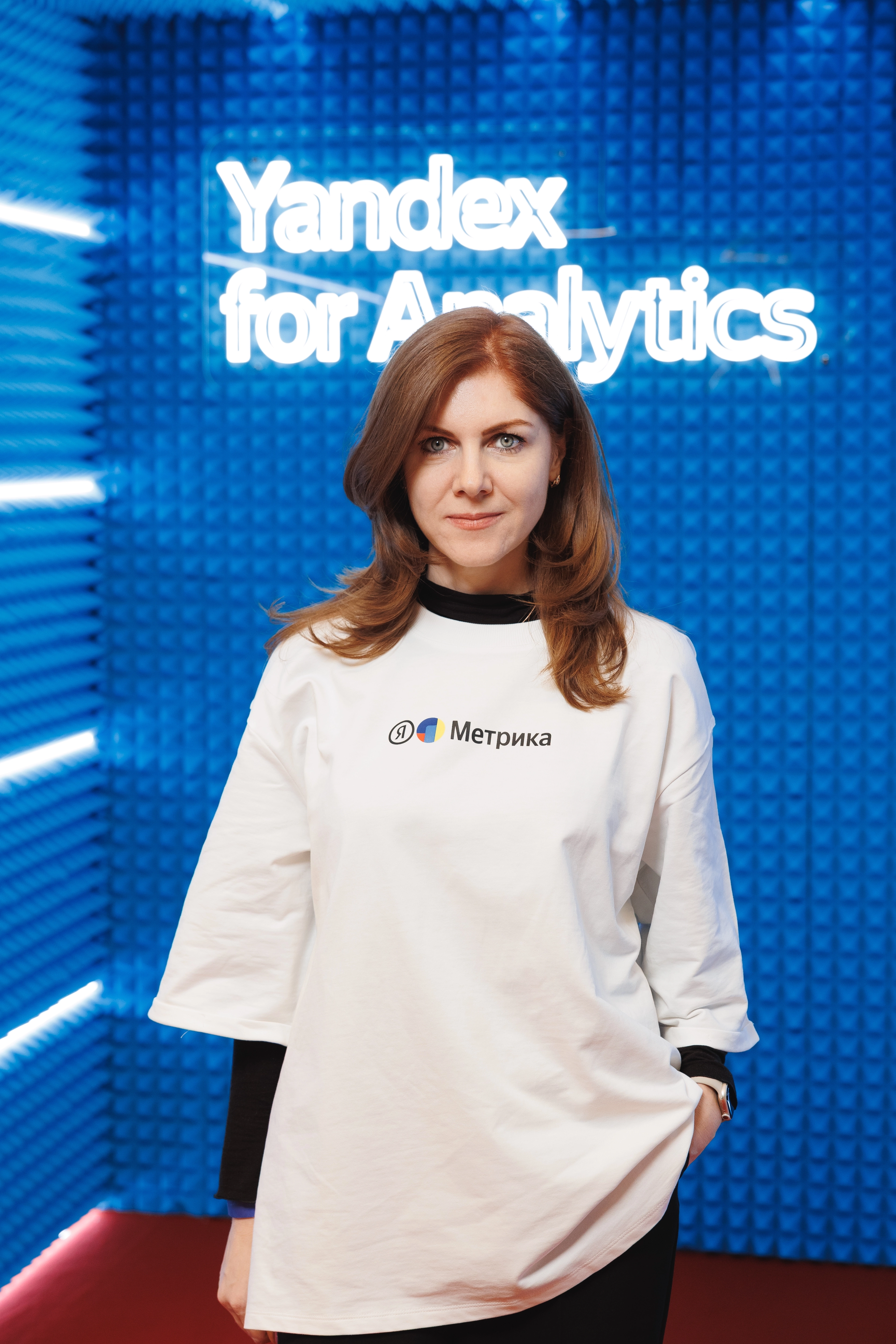
Галина БлонскаяProduct manager, Yandex
A new data model makes it possible to build a flexible attribution window, link media impressions with Metrica goals and AppMetrica events, and add new parameters and traffic-quality metrics.
10:20 - 10:55Arkhangelsk
Анна КоковинаProduct manager, Yandex AI Studio
We turn a chain of analytical steps into an automated process: forming queries, analyzing dynamics, and using the results to test product and marketing hypotheses. How a multi-step search agent works — one that forms queries, studies results, returns to search, and collects information from many sources — and how to turn typical competitive research from a manual process into repeatable agentic research.
10:20 - 10:55Physics
Андрей КоролевAnalytics director, T-Bank
Customer service quality is a manageable economic parameter, not just a set of operational SLAs. At T-Bank, a large-scale A/B test was run that abandoned a single support standard: different segments got austerity modes (ECO, −30% costs) and premium support (CX+, +70% costs). The experiment proved that investment in quality pays off far beyond the contact center: CX+ mode statistically significantly grows NPV, increases product utilization, and even reduces the share of loan delinquencies. We will break down the evaluation mechanics via LTV proxy metrics and show how to differentiate service so you can safely cut costs and maximize total profit
11:00
11:00 - 11:35Molecule
Николай ГоловProduct director at Tengri Data, ex-Avito
The risks of modern personal data protection laws (GDPR, 152 FZ, CCPA, PDPA, PDPL, DPDPA) in the context of using external AI models. How legal is it to send personal data to external AI service APIs? How realistic is it to protect against risks through obfuscation of the data sent? We break down the risks, the opportunities, and the reliability of such protection
11:00 - 11:35Atom
Олеся НорицынаData scientist, CUBE
A step-by-step guide to assembling a Bayesian MMM for “flight” placements and a model diagnostics checklist. A breakdown of working with adstock (the effect of fading memory of advertising) and saturation (diminishing returns on investment)
11:00 - 11:35Arkhangelsk
Артем ПрокопенкоPhD in physics and mathematics, lead analyst of the A/B platform, Cian
A system of AI agents around the A/B platform and measuring its reliability via a benchmark based on mutation testing: we inject controlled defects into cases with a known answer and calculate mutation score, false positive rate, and the detection threshold. On this proving ground we compare models and architectures and determine the tolerance limits where agents can already be trusted
11:00 - 11:35Physics
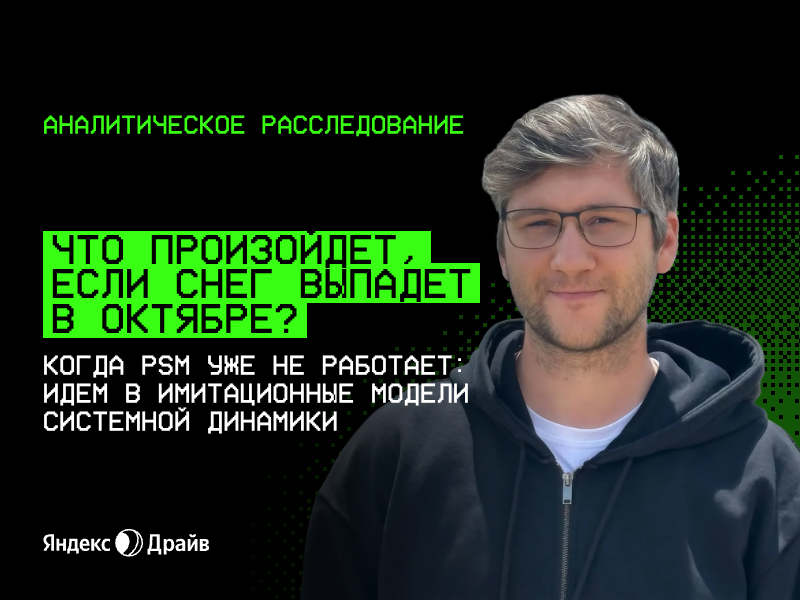
Дмитрий ПавловAnalyst, Yandex.Drive
A system dynamics simulation model calibrated to actual business metrics, answering the question of what will happen to the metrics if business parameters are varied.
11:00 - 12:10Kinetics
Денис ПлатоновCEO, Excite Kit
Александр СорокинProfessor, dr. of economics and founder of the “Center for Statistical Analysis”.
Participants will go through the cycle from labeling user actions to forming product hypotheses and launching an A/B test on a real ecom client of the uxrocket.ru platform. Participants will also perform post-analysis and learn to form hypotheses that lead to growth 3 times more often.
11:40
11:40 - 12:10Molecule
AI SAFETYMolecule
Where do personal data appear in an LLM product? How an external API, a Russian intermediary and self-hosting an open model differ. How to establish the actual recipients of data and the countries of processing. Legal grounds for processing, localization, notifications under Articles 12 and 22, contracts and the allocation of liability. What information you need to obtain from the vendor and what to do if it does not disclose the necessary terms. What happens to the legal status of data after full names and phone numbers are removed. How to account for indirect identification, a retained mapping table and the possibility of restoring information from context. Storage of requests and responses, use of data for training, employee access, engagement of other processors, deletion of information and actions in case of incidents. Walkthroughs of typical product scenarios and edge cases (for example, the model is hosted inside the company, but individual components — speech recognition, embedding generation or logging — use external services. How to assess the system as a whole in this case)
11:40 - 12:10Atom
Максим КочуровDirector, Veroyatnostnye Resheniya
We discuss identifiability, bias and decision-making under uncertainty. Bayesian non-linear econometrics makes it possible to estimate causal relationships, and how to build such a model will be the subject of our conversation: how to construct a model so that it is not only interpretable but also identifiable, how to parameterize it so that it doesn't fall apart during estimation and the bias is overcome, how to make decisions under uncertainty, and how stochastic optimization theory can help us.
11:40 - 12:10Arkhangelsk
Сергей БажинChief data analyst, IT holding T1
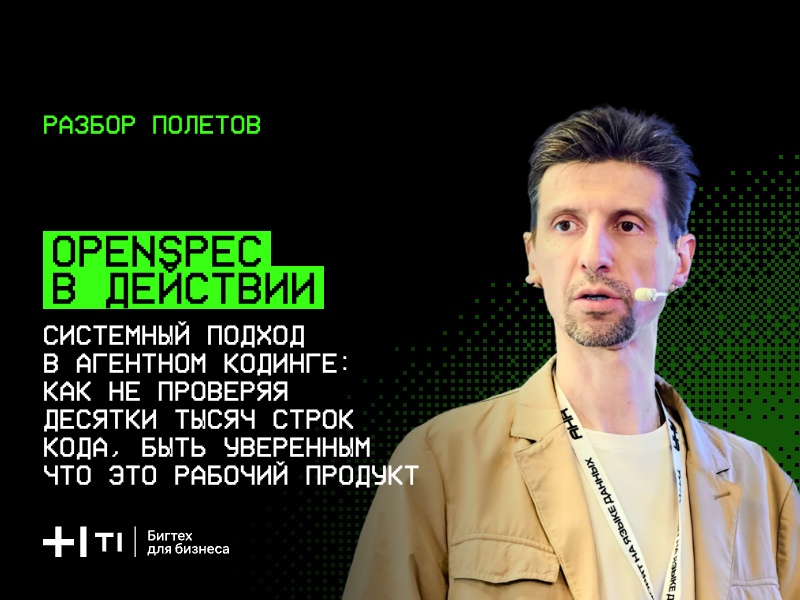
A working bundle of open-source tools for agentic coding. The OpenSpec and OpenSpec+ development methodology. Turning chaotic generation into a predictable and controlled engineering process.
11:40 - 12:10Physics
Курамагомед АлиевSenior product analyst, RWB
In our case we cannot split sellers into groups A and B: that would mean giving different sellers different promotion conditions. So a classic A/B test is impossible. The solution is synthetic control: it makes it possible to measure the effect of changes without directly splitting sellers into test and control groups
12:15
12:15 - 13:20Molecule
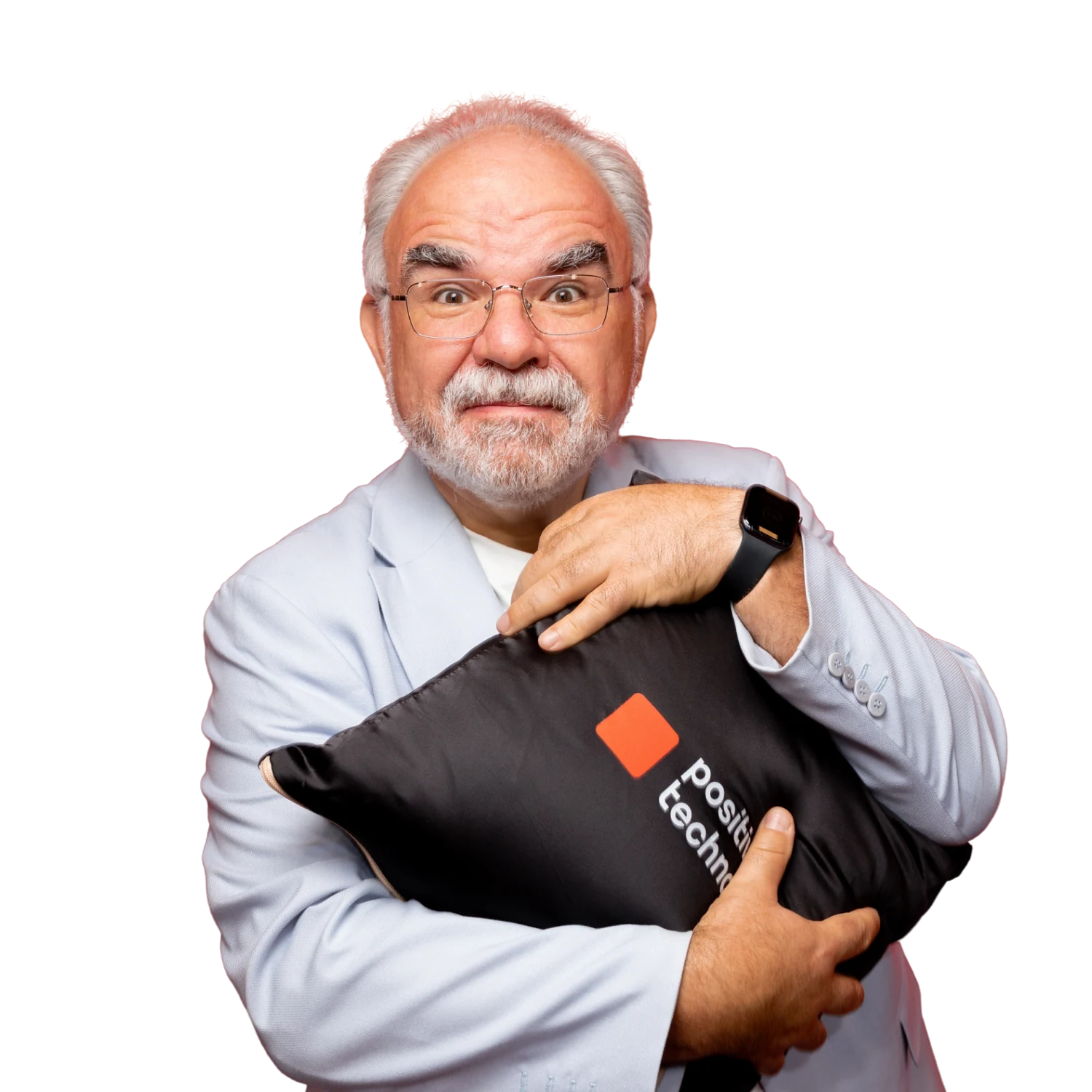
Алексей ЛукацкийChief Evangelist Officer, Positive Technologies
Banning ChatGPT is easier than learning to work with it safely. Positive Technologies' chief infosec evangelist Alexey Lukatsky explains how Russian companies build secure workflows with Western LLMs. In the lecture we will look at data anonymization methods, the architecture of AI firewalls and, most importantly, how a product analyst can learn to negotiate with the cybersecurity department so that the favorite phrase "infosec won't approve this" becomes the start of a productive dialogue rather than a cross over AI adoption.
12:15 - 12:45Atom
Максим КалацкийCAO Adtech, Magnit AdTech
When utilization is at its peak, you cannot show the business multiple-fold growth, nor give partners the required volumes at the expense of free traffic. We share our utilization calculation methodology, approaches to media planning and ways to cool down traffic.
12:15 - 12:45Arkhangelsk
Екатерина ГерасименкоTechnical product manager, MAGNIT TECH
Moving work from manual handovers and repetitive development into configuration, generators and platform tooling. This shortens the path from describing a source to data appearing in the platform and lets us scale the onboarding of typical sources without a proportional growth in manual work.
12:15 - 12:45Physics
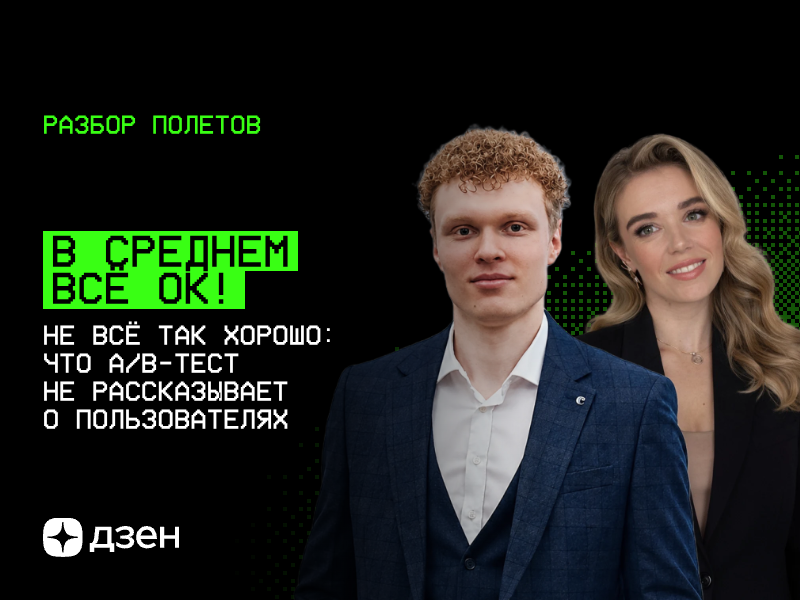
Марк ХабаровHead of the ML analytics team, VK (Dzen)
МА
Мария АвдееваSenior technical analyst, VK
How a deep analysis of an A/B test audience helps find unexpected experiment effects, make more precise product decisions, and improve the quality and accuracy of recommendations.
12:15 - 13:20Kinetics
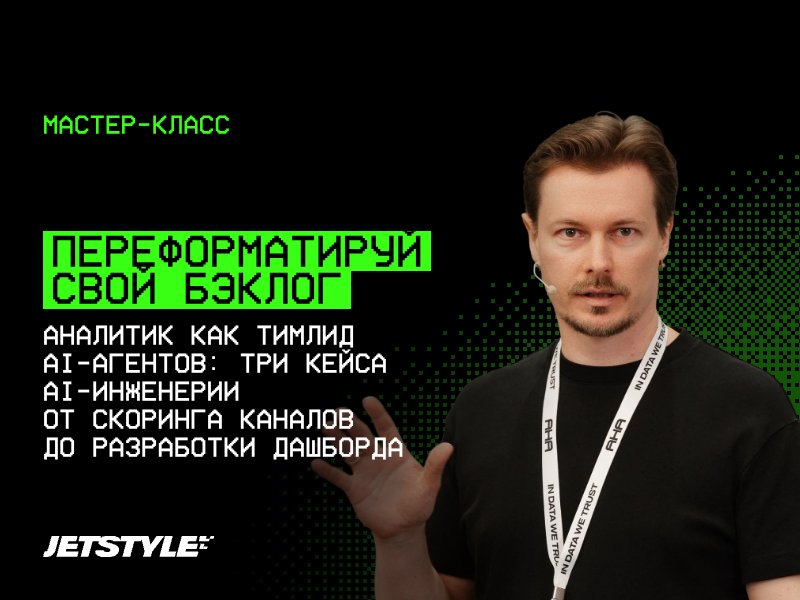
Евгений КузнецовHead of analytics, JetStyle
We turn AI from a code generator into a managed executor capable of taking a task from a vague business question to a verifiable result.
12:50
12:50 - 13:20Atom
Максим КоматовскийHead of the analytics group, Yandex
The metric the business wants to influence and the metric the business can influence with an arbitrary action are usually different metrics. We look at how to build healthy iteration on product hypotheses using a metric graph. Listeners will learn how to extract more information from a set of experiments — what else can be learned about users by looking at the whole set of experiments — and how to measure and decompose the effect of a package of marketing changes on a business metric when no single experiment gives an answer on its own.
12:50 - 13:20Arkhangelsk
Фёдор ХолькинDatawarrior
Solving the task of eliminating chaos in company data and creating a corporate knowledge graph. The sequence of moving from fixing a specific analytical problem to a shared context for AI tools. The talk will help assess which knowledge needs to be formalized in your company, how to check its quality and which workflow to start implementation with.
12:50 - 13:20Physics
Андрей РомановAnalytics team lead, Avito
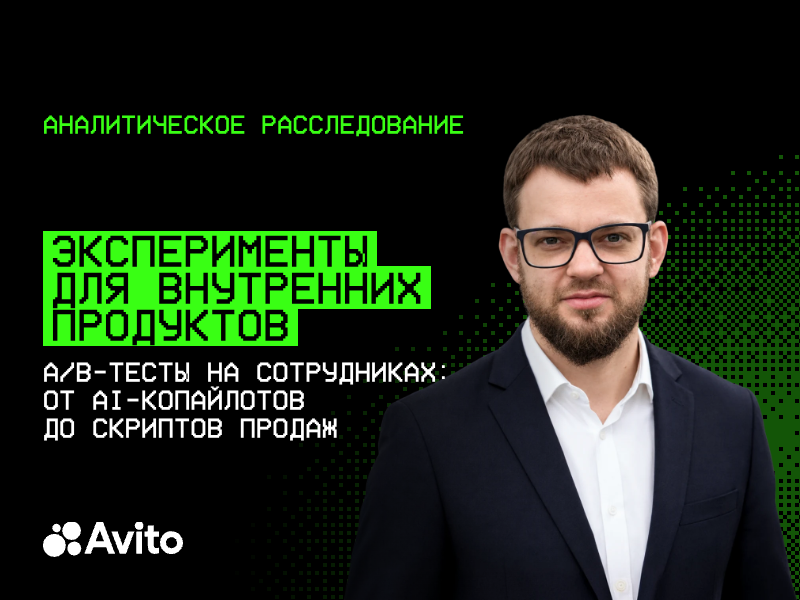
The specifics of testing AI copilots and other internal products and company processes, in order to answer precisely the question "did the new tool change employees' work enough to make scaling it worthwhile".
13:25
13:25 - 14:30Molecule
Александр АбрамовAI consultant, VkusVill
Александр МаерInformation security methodologist, TechVill
Deploying AI does not protect against leaks if, for the sake of speed, a user copies the whole trade secret into the prompt and grants the app access to the entire disk. The talk examines the architecture for restricting AI services' access to corporate data and two vulnerability mechanisms: providers' open logs and the transmission of hidden instructions into active sessions. The speakers will show how to build a "green corridor" for typical tasks, introduce AI solution passports and test security through simulation of work processes.
13:25 - 13:55Atom
Наталья ЦветковаHead of data analysis, Veborama
Денис ГнатенкоProduct director, Veborama
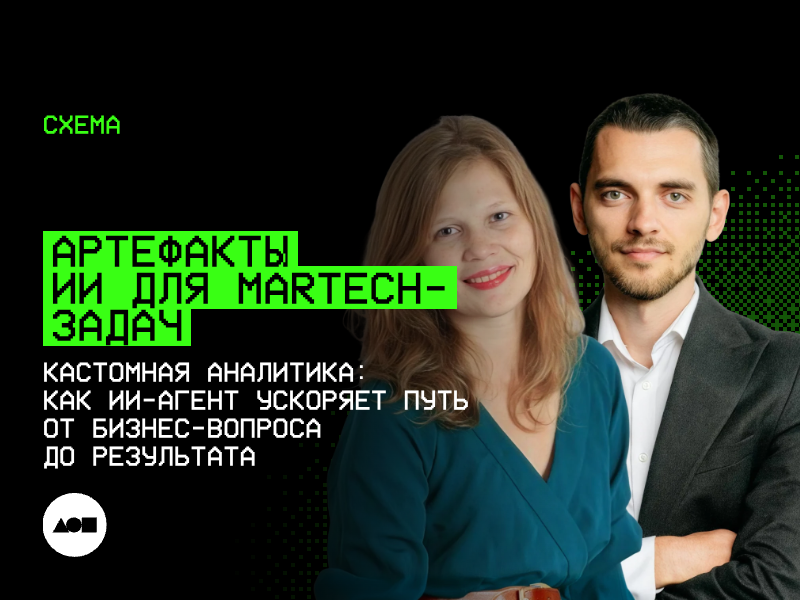
A scheme for embedding an AI agent into the request-processing pipeline, with automated quality control and important human checkpoints. We break down the solution's architecture, the logic of automated data quality tests, typical mistakes and the agent's operational limits
13:25 - 13:55Arkhangelsk
Александр БарышниковHead of corporate data warehouse development, Artenecy
We have built a conversational AI assistant into everyday work: an employee asks about sales in plain words, by text or voice, and gets a chart or a numeric answer. Access rights are inherited from BI, the answer is verified by code, and next to each number sits its "passport" (period, filters, source). Using a mistake the model made, I will show how verification works, what we measure in the pilot and where the bot went wrong. And then — the move to AI-native analytics: executives work with data themselves, their questions accumulate in a knowledge base, the business maintains the metrics dictionary, and the analyst becomes the architect of a system that brings hypotheses
13:25 - 13:55Physics
ТП
Тимур ПыгамовT-Bank
МД
Максим ДянкинT-Bank
A complete interference model (distortion of a result due to overlapping experiments), an original criterion for assessing the influence of one experiment on another, and an internal tool for on-the-fly checking, from the ASL team that builds T-Bank's in-house A/B platform.
13:25 - 14:30Kinetics
Сергей КукурузHead of strategic projects, Yandex AI Studio
Assembling agentic systems that deliver results of stable quality. An engineering breakdown of components and architecture patterns for AI solutions.
14:00
14:00 - 14:30Arkhangelsk
Павел ДубининHead of product development, Yandex DataLens
Connecting an LLM to a database is not analytics yet: the agent does not know where the data came from, who has access to it and how the metric was calculated. We tell how AI was embedded into every step of the analytical cycle (loading, SQL, orchestration, catalog, dashboards) and what context it needed for that: automatically collected metadata, lineage, permissions at the platform level. We will break down where the agent already replaces manual work, where it makes mistakes and how to verify its answer all the way down to the source table. The experience of DataLens Platform, the largest update to DataLens: an AI-first platform where lakehouse, orchestration and a data catalog were added to the familiar dashboards in a single interface
14:00 - 14:30Physics
Анна СтавнийчукPhD in economics, researcher at the Faculty of Economics, MSU, expert in causal inference econometrics and experimental methods
Review sentiment, contact topic, product category — until recently all of this was labeled by hand, and now it is labeled by language models. Along with that, the status of the numbers computed on such labeling has changed. The dashboard metric and the experiment's target metric are no longer observed — they are predicted. Can you compute statistics on a metric that a model assigned, and what is wrong with that statistics?
15:15
15:15 - 16:00Molecule
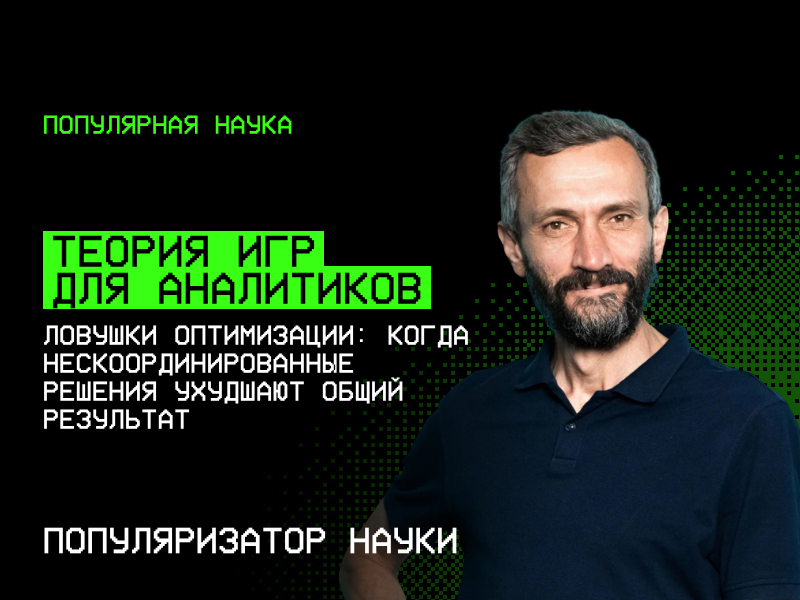
Алексей СавватеевRussian mathematician and specialist in mathematical economics, science popularizer
Game theory for analysts. In his lecture on game theory, Alexey Savvateev will explain the Nash equilibrium concept in accessible terms and show through a series of examples how the interaction of selfish participants can lead to a collective loss. Braess's paradox, the prisoner's dilemma, the tragedy of the commons — in all these situations equilibrium logic does not guarantee a satisfactory outcome from the standpoint of the global benefit to society. Particular attention will be paid to how changing the rules of the game changes people's behavior, which must be taken into account when designing incentive schemes. No special mathematical background is required, but a willingness to reason will come in handy.
15:15 - 16:00Atom
DISCUSSIONSAtom
A discussion among analytics leaders at major technology companies about the future of the function: which tasks will go away, which areas of responsibility will emerge and how to prepare teams for these changes.
15:15 - 16:00Physics
DISCUSSIONSPhysics
ЕФ
Евгений ФиногеевHead of AI translation and AI adoption in production processes, RWB
ВД
Виктория ДочкинаDirector of the AI Development and Data Research Center, Strategy and Development block, Сбер
ПК
Павел КриворучкоDirector of the Personalization and Feedback vertical department, X5
РБ
Роман БудылинHead of DS team, Авито Авто
AI/ML team leads share practical experience, engineering trade-offs and the approaches they use in their work
15:15 - 16:00Kinetics
Виталий ШатиловLead AI developer, T1 IT holding
Master class participants will learn about a comprehensive approach to ensuring the basic principles of information security for their own products. The session will cover, among other things, automatic scanning against public vulnerability databases, in-house "mirrors" with already verified packages and other tools. Attendees will get a checklist of critically important points to watch during product development by agents. The master class is accompanied by a large set of cases and examples.
16:35
16:35 - 17:40Molecule
No trackMolecule
Summing up, conference analytics, discussion of news and future plans, new product announcements, thank-yous and other important pleasant moments. During the closing there will be a draw of all prizes from Partners, exhibitors and friends of the conference (only those present in the hall can take part)"
16:35 - 17:40Arkhangelsk
DISCUSSIONSArkhangelsk
ИГ
Ирина ГовороваML team lead, Trust and Safety, Циан
Representatives of large digital products share real cases of data classification and enrichment with ML/LLM. We discuss how AI helps automate business processes in Trust & Safety, cut costs and achieve a measurable economic effect.
16:35 - 17:40Physics
DISCUSSIONSPhysics
In a year, measurements of brand visibility in neural-network answers have gone from an experiment to a line in the media plan. But there is still no single methodology: agencies, vendors and in-house teams define a mention differently, build the prompt sample differently, choose the number of runs differently and assess the stability of results differently.
17:45
17:45 - 19:00Molecule
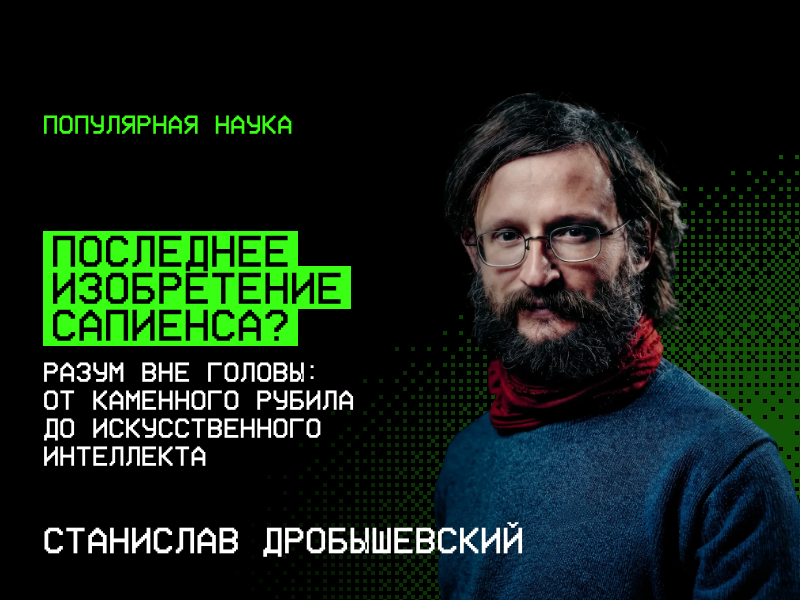
Станислав ДробышевскийRussian paleoanthropologist and science popularizer
How our brain created knowledge and how the artificial information environment affects it, when AI changes the cultural environment faster than human biology.
17:45 - 19:00Physics
DISCUSSIONSPhysics
We are used to testing hypotheses and trusting data. But what if today you need to guess not the exact answer, but the one the majority chose? We guess the most popular answers, dig into the industry's pain points and check how well our ideas about users match reality. Only logic, intuition and collective intelligence.