11:00 - 12:10 Molecule
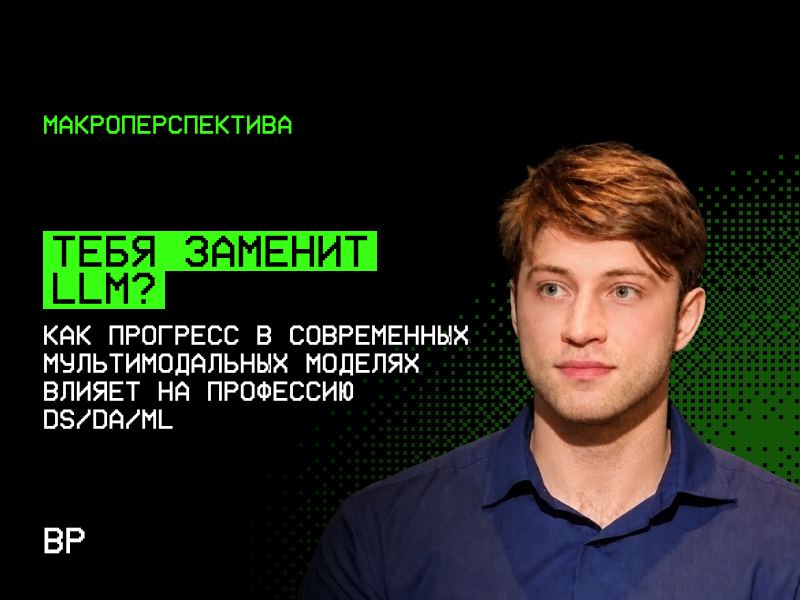

Валерий Бабушкин Senior chief boss, BP
Valery Babushkin, senior chief boss at BP.
Matemarketing 2026 · 26 November, Thu
Day 1 of the program: 39 talks in 5 halls. Times are Moscow time; the grid mirrors the original page but is built at build time.
Valery Babushkin, senior chief boss at BP.
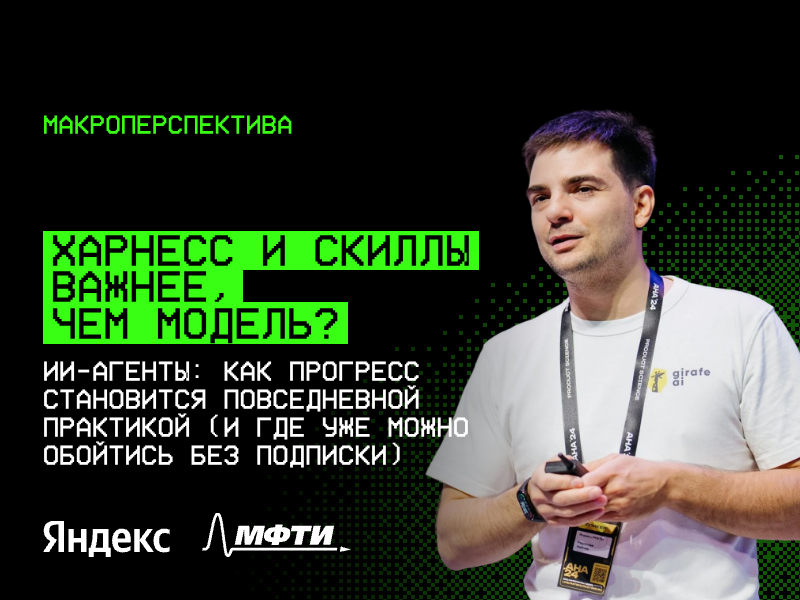
Working scenarios without a subscription to Claude Code, Codex and other cutting-edge solutions. Which tasks are solvable right now on a fully open stack, and where limitations remain. Experiments with Goose, Qwen and DeepSeek


The speaker shares SQL code that lets you check whether your attribution model is honest on your own data, plus a faster marker of incorrect source evaluation in one-touch models. Attendees will get a reusable analytical framework for quickly quantifying problems with one-touch attribution, which distorts the real contribution of advertising channels in B2B products and services with long deal cycles.


Setting up the scaffolding and MCP servers to automate routine work. A breakdown of scaling mistakes, operational limitations and the tasks where LLMs absolutely must not be left unchecked


Transforming raw voice logs into structured datasets with neural networks. We build automatic transcription, intent tagging and emotion recognition to turn speech into data suitable for quantitative analysis


How can the whole company go from "AI, help me write SQL" to "AI, take the task entirely"? I'll tell you which technical solutions we assembled for this in our division at Yandex and how we tied them into a single system. In my story we'll break down three drivers of AI usage growth: Adoption — so that people start using AI. How to remove all barriers and make AI a familiar working tool. Harness — so that the agent uses internal tools. How to give the next-token predictor the ability to use the utilities people use and teach it the necessary skills, and then also verify the result. Knowledge — so that the agent understands the context of your business. How to give the agent information about data, code, and company documentation so that you explain less from scratch and don't fill up the entire context window. I'll show how this ecosystem is structured: from interfaces for working with agents to documentation testing. At the end we'll assemble everything on the example of a typical analyst task, and you'll be able to try this architecture on your team and understand which components you're still missing.

I'll talk about how we organize end-to-end automation of typical data tasks: how the work of departments changes with the arrival of agents, and how we managed to achieve a 73% speedup on tasks performed by agents. Separately we'll discuss how to calculate the value of AI agents and what to focus on at the organizational level in order to move forward with the agentization of typical data work processes.


We describe a working process inside the closed perimeter of a state bank. We assembled a unified knowledge base about customers from all available sources. On its basis a customer portrait is automatically formed, and from the portrait an offer relevant specifically to them is prepared. The entire path from data collection to a ready offer for the manager is automated. The value of the case is that this is a working process inside the closed perimeter of a state bank, not an experiment. How to build a portrait of a customer the bank does not yet have: which sources proved useful and which turned out to be noise.
- Which boundaries between professions are losing their meaning, and which are becoming especially important? - Where to get experience and how to learn throughout a career? - What to check without AI, and what — necessarily with AI? Where is independent mastery of the method important, and where is the ability to obtain and verify a result with tools? - Which assessment formats should change? What can an exam, homework, a test assignment, a portfolio and a technical interview now show? - How to verify understanding and transfer of a skill? Is it enough to ask someone to explain a solution, find an error, or adapt an approach to new conditions? - How to evaluate work with AI? Which signs distinguish a strong user from a person who accepts a convincing answer without checking? - How to verify the qualifications of current employees? What should confirm readiness for greater responsibility or a move to an adjacent role? - What should a specialist invest their time in right now?
How to go from raw data to an answer about a product — in a single platform and with the help of AI? In the master class we'll walk through this cycle on a practical example: load data into Lakehouse, prepare SQL queries with an AI agent and set up orchestration, organize a data catalog and access rights, and then assemble a dashboard with Neuroanalyst.
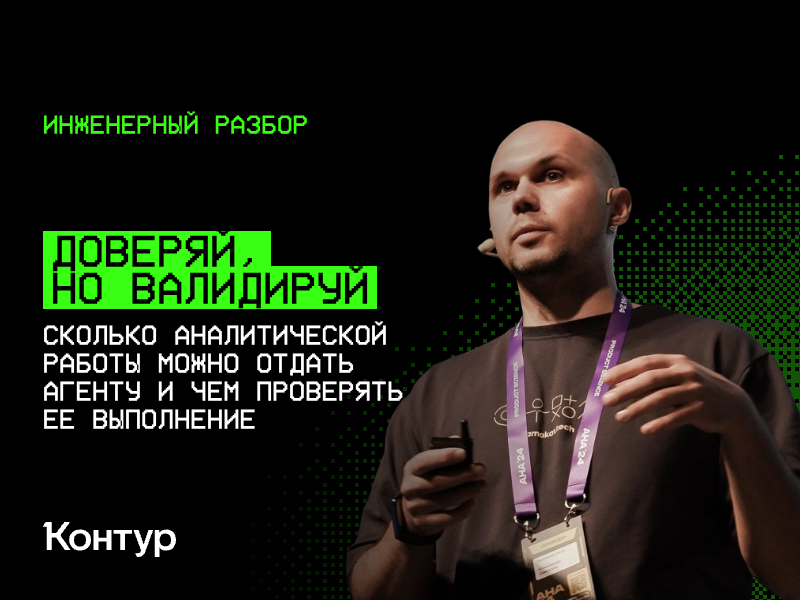

Eight steps from an analytical task to an accepted agent answer with checks at different stages: transferability is determined not by the complexity of the task, but by whether the decisions it requires are declared; an undeclared decision will still be made — by a layer, a mart or a model; acceptance depends on the image of the result, and acceptance itself has a blind spot.


Experience of making complex decisions for arbitrating internal traffic and decisions to maximize ecosystem ROI.
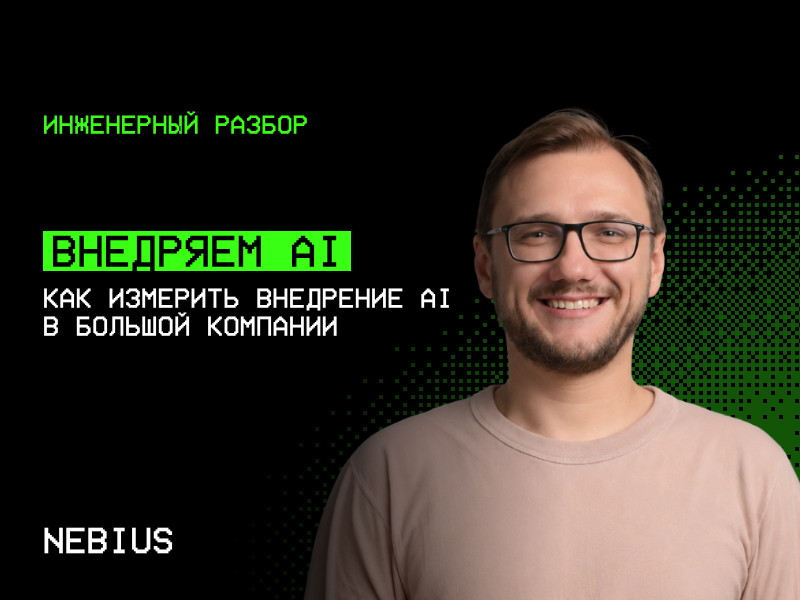

A systematic approach to assessing AI Adoption inside a large company: from solution architecture to a detailed breakdown of the methods applied. Attendees will get a framework for evaluating the effectiveness of AI initiatives, allowing them to manage the process of neural network adoption based on data.


What the near future of analysts will look like, when report and insight factories have already earned their reputation, the analyst is no longer a "bottleneck", and the volume of company context is finite for building an analytical system


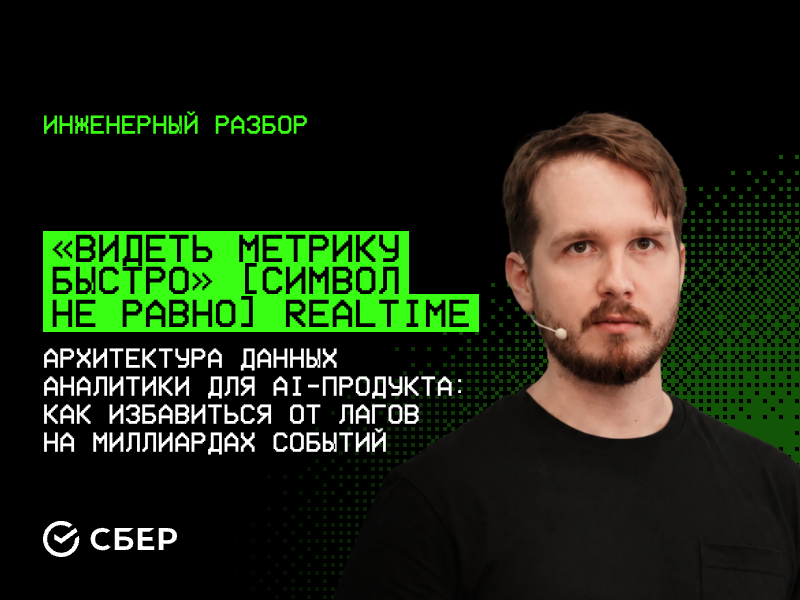
A breakdown of a working realtime attribution system that we designed, brought to production load and measured ourselves, with numbers at every step: from 11 rows/s in staging to ~26 thousand events/s in production, with benchmarks of four databases and cost in rubles per million events. Attendees will take away not a list of technologies, but verifiable selection rules. We'll show not only the results but also our own mistakes in measurement methodology
As a team grows, people management takes up ever more of a leader's time and attention. Hiring, employee development and organizational issues push out project context — it becomes harder for the leader to discuss tasks substantively and offer meaningful solutions. We'll talk about how to distribute a limited context window between people and projects, what level of immersion is really necessary, and which practices help maintain an understanding of what is actually happening in the team. Key thesis: a leader's resource is limited not only by time, but by the volume of context they are able to hold. The balance between people management and projects is achieved largely through managing one's own attention.
AI agents allow analysts and managers to create interactive HTML reports in minutes — flexible, but not always reliable. Using examples from different business units of Yandex, we'll compare HTML and classic dashboards, and also show how the SDK helps combine flexibility with the controllability of BI.


How to turn work with LLMs into a sustainable management method and optimize the managerial decision-making process

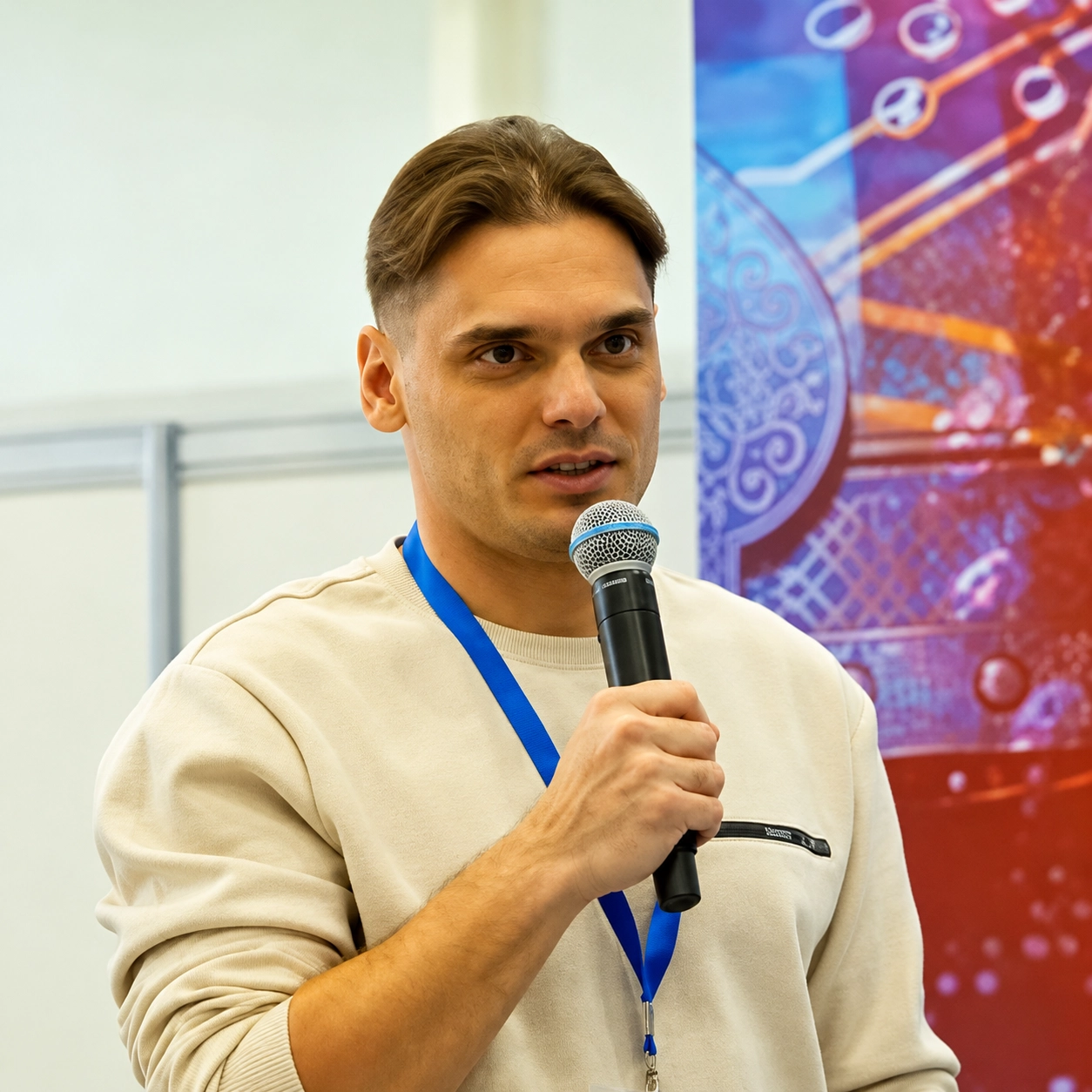
Cases of detecting automated traffic and approaches to assessing filtering quality. multi-level analysis of the browser environment, about abandoning IP blocking in favor of targeted filtering at the L7 level.


We'll talk about how to achieve a measurable result today in areas where quite recently people relied "on faith", how to build an AI-native marketing framework and why a revolution rather than an evolution is needed here. I'll talk in detail about what concrete examples of marketing mechanisms at Avito look like and share life hacks that bring results.

A proven scheme for building high-load pipelines for preparing ML datasets, crawling and ETL. How to embed business logic in the data model, and why abandoning streaming aggregation of global states makes the system resilient


We'll honestly break down what is actually valued in interviews and how to stand out among other candidates. We'll talk about salaries, strange company requirements and matching with the future team. We'll find out where it's better to grow as a specialist, where to go for money, and what matters more when choosing an offer: title, interesting tasks, people or salary.


What we do to make pricing at Avito fairer for the seller by optimizing contact cost.


Standard statistical tests do not work for complex product metrics (MAU, Retention, NPS, CTR) because of their ratio structure and autocorrelation, and bootstrap takes too much time. In the workshop we'll break down the creation of a fully autonomous pipeline for evaluating A/B experiments in pure SQL (Presto/Trino) without third-party platforms. Participants will get a ready algorithm and code: from setting up SRM control and linearizing metrics to calculating MDE with the Bonferroni correction and obtaining final p-values from raw logs.


The main result of analytics is expressed not by the accuracy of numbers, but by which decisions the company makes on their basis. What to do when familiar product metrics have stopped reflecting the long-term health of the product, and different teams understand differently what exactly counts as success? You will learn how to change the approach to product measurement and influence real business decisions
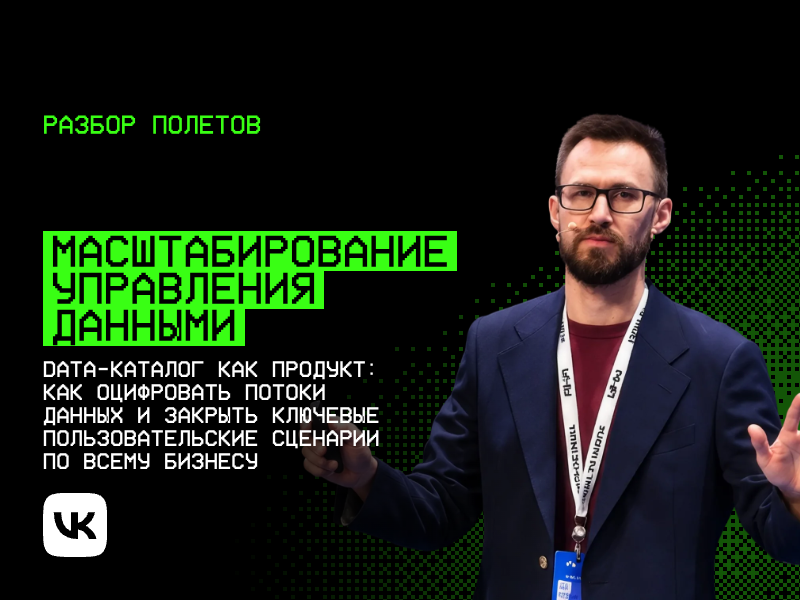

Turning a data catalog from a "registry of tables" into an internal product at the ecosystem level, building an architectural frame, and then "sewing" into it the logic that closes real user scenarios of analysts, engineers and data owners.


Assessing trends in product analyst skills based on an analysis of the global and Russian research agenda. Semantic maps, trends, development drivers and barriers are presented. Attendees will get acquainted with changes in the product analyst profession (how demand for skills and competencies is changing and how and what the refocusing is).

We parsed the "black box" of seller-assistant dialogues, even without using LLM judges. We managed to fully build funnels of recommendation execution, identify the main user scenarios for using the assistant and measure the quality of the AI assistant.


Transformation of the data analytics vertical into an AI-native state. Attendees will learn about the "fast-track" for transformation aimed at a radical reduction of the t2m of solving tasks without loss in quality. We'll break down in detail the target infrastructure architecture for an AI-native team, the competencies needed for success and how to deal with rejection of the paradigm shift by the team
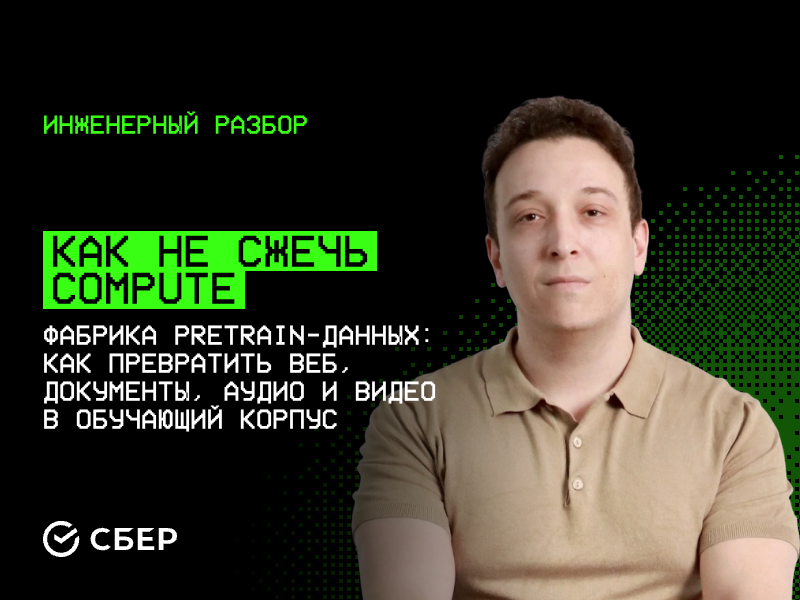

Data quality control at big tech scale without manual labeling and the specifics of preparing media sources. The architecture of a pretrain corpus preparation pipeline and a checklist of what to cut off so as not to burn expensive compute on dirty data


How to grow novice analysts so that they become independent faster, bring value to the product and do not lose interest in the work after the probation period. I'll share how we work with mistakes, questions, feedback and gradually transfer responsibility. And we'll talk about why even a well-trained junior may want to leave


We turned mass CRM pushes into a system that automatically adjusts the volume and composition of the audience to the balance of supply and demand on the part-time work platform. We break down the path from calculating segments and prioritizing users to verifying the solution with an A/B test. As a result, users began receiving six times fewer pushes without a decrease in the number of shift bookings.
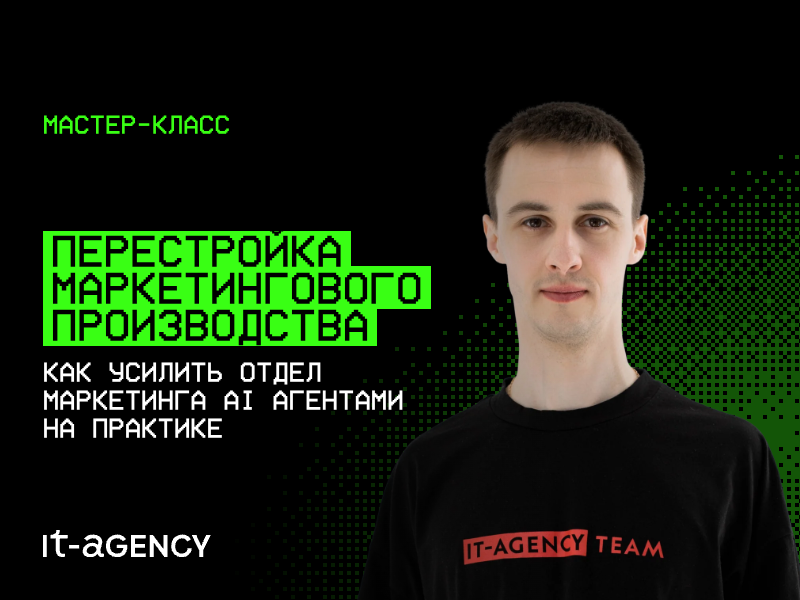

How agents run Yandex.Direct, generate content and design, build analytical dashboards and perform marketing tasks on schedule.



Can the path from an idea to launching a ready feature in production be combined into a single process managed by AI agents? We'll tell how we created a product for end-to-end development automation: from the arrival of a feature request and elaboration of requirements to implementation, testing and publication of a ready solution. We'll clearly show exactly how AI agents interact with each other, take on tasks at different stages of development and help manage the entire process in a single system. Using our solution as an example, we'll break down how the familiar development process changes, what role a human plays in it and how to move from individual AI tools to full-fledged agent automation


We break down the architecture of an agent system: the task contract, agent management, data and tools, calculations and checks. I'll show how the task, calculation results and check statuses are transferred, when rework is needed and where a human makes the decision. On our cases I'll break down ambiguous metrics, the link between model quality and business KPIs and the impact of drift. The checks will cover data, the applicability of the method, the validity of conclusions and the robustness of recommendations to assumptions: rules and recalculation, the agent searching for contradictions, review by a specialist. I'll show how we plan to apply the architecture in Alfa-Bank's experimentation and Data Science platform


A candidate sold themselves perfectly in the interview, but it turned out that something was off and they need to be fired. What to do if HR does not agree to fire based on the results of the probation period, but you don't want to be a hostage of the situation either.

The cross-category monetization feed on the home page is one of the most lucrative rollouts of the monetization efficiency team. I'll tell how we learned to bring quality paid traffic from the home page. Separately I'll break down the main lesson for analytics: why in A/B tests that change ranking, a per-user split inflates the revenue effect many times over, how we caught this and measured it.
A breakdown of industry practice in creating and using LLMs. The speaker shares a "ladder of options" and a transparent estimate for each scenario: using models via API, running an open model on your own infrastructure, adapting to a specific task or domain, a company's central model, proprietary pretrain and developing a frontier model. We break down which needs each scenario covers and which requirements really justify moving to a more complex solution. What each estimate consists of and the phasing method that allows buying step-by-step hypothesis checks with decision points.
No talks for this track on this day.
Searches all three days: title, speaker, track, hall.
Nothing found.