Digital Garden
Business Context
Knowledge as chronological posts ages quickly and loses connections. A digital garden is the opposite of a blog: notes are not ordered by date but linked with [[wikilinks]], have maturity stages (seedling → evergreen), and evolve over time. The task: publish a personal Zettelkasten as a static site with a link graph.
Hypothesis
If we publish notes through Quartz v4 with backlinks, graph view, and full-text search, the reader sees not isolated texts but a network of ideas — and can navigate by meaning, not chronology. That is closer to how thoughts are actually structured than a post feed.
Data & Method
Content model: atomic notes in Obsidian-flavored Markdown. Each note is one idea, with YAML frontmatter, tags, and [[wikilinks]] to neighboring concepts.
Quartz v4:
- TypeScript plugins for rendering — extensibility out of the box.
- Backlinks: each note shows everyone that links to it.
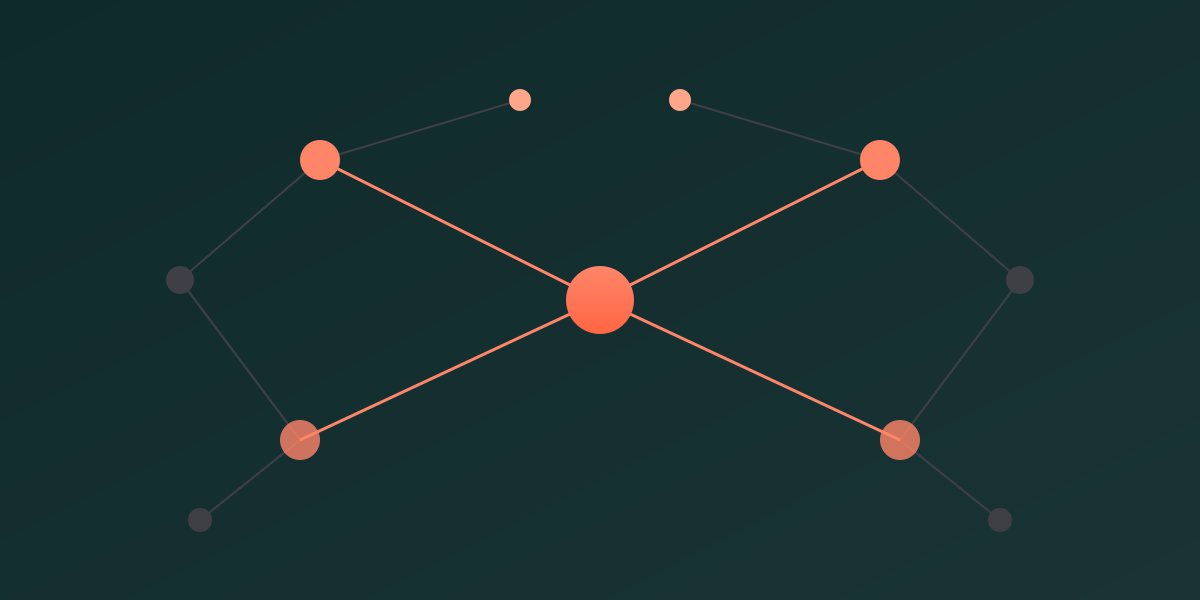
- Graph view: a visualization of the note graph (nodes = notes, edges = links).
- Full-text search, popover preview on
[[wikilink]]hover. - Static output — host on GitHub Pages, no server.
Insight
The power of a digital garden is in the links, not the individual notes. Backlinks turn a note into a “node” and show which contexts include it. The graph turns note accumulation into a navigable structure: topic clusters and isolated islands are visible. A chronological blog answers “when”; a garden answers “how is this connected.”
Impact
- Linked-notes Zettelkasten — backlinks + graph view instead of a post feed.
- Atomic evergreen notes — content matures instead of aging by date.
- Quartz v4 on TypeScript — static output, extensible plugins, no server.
- Obsidian-flavored Markdown → public site — one source, two consumption paths.